


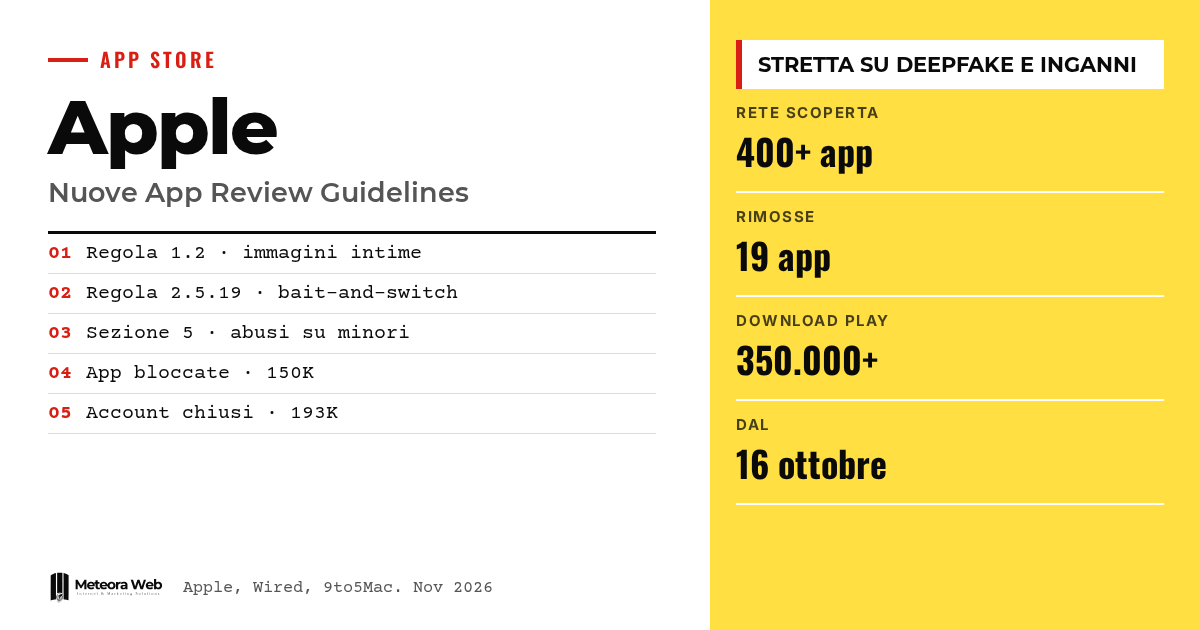
Apple and Google removed scores of apps from their stores after an investigation revealed a network of more than 400 applications disguising themselves as benign AI services while secretly generating sexually explicit and violent deepfakes.
The operation, uncovered by Wired and the nonprofit research group AI Forensics, featured applications such as Viefur, which purported to add clothing to pet photos, and other apps claiming to offer language tuition or AI workout coaching. Upon installation, these apps appeared ordinary, but a server-side check determined whether to display harmless content or load a hidden web interface capable of generating deepfake images and videos using user-uploaded photos.
Researchers found the network included templates depicting violent scenarios such as "bedroom rape" and "threatening knife," where a man holds a knife to a woman's neck. The apps used digital coins -- roughly $4 for 130 coins -- to allow users to generate deepfakes. The network was traced to Chinese developers and a Hong Kong-registered entity called KeLing Technology Limited.
The apps used bait-and-switch tactics to pass app review. They showed benign content during Apple and Google scrutiny, but developers later changed the server-side content, replacing approved material with pornographic deepfake capabilities. Downloading an app after clicking a Meta platform ad appeared to be one trigger for activating the explicit features.
The investigation found the apps had been available for around a year, at times publishing dozens per week, despite policies from Apple, Google and Meta prohibiting harmful deepfake content. Apple removed 19 apps after Wired shared the details with the company. A spokesperson said the apps had complied with rules at review, but developers changed the website the app pulls its content from after approval. Meta said it took action against more than 10,000 ad accounts linked to domains associated with these apps and banned KeLing Technology from advertising in 2025.
The EU's ban on nudifier apps was set to take effect one month after the investigation was published, highlighting the regulatory response to this commercially organized operation. The case underscores the limitations of pre-publication app review when harmful content can be activated post-approval through server-side changes.