
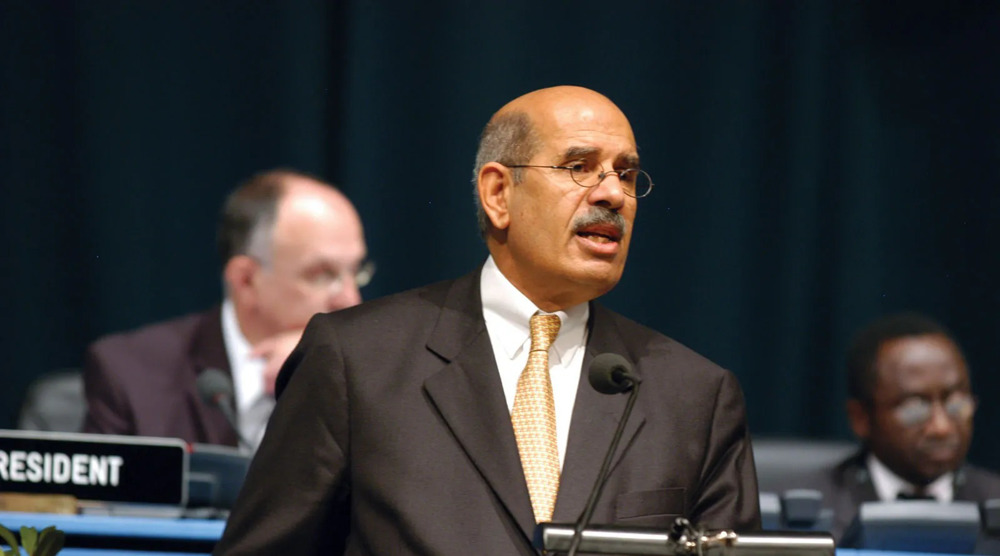
Nobel laureate Mohamed ElBaradei has warned that any new United States military strike against Iran would be 'a blow of madness,' stating it would lead only to more violence and destruction in the region. The former International Atomic Energy Agency director general and 2005 Nobel Peace Prize recipient made the remarks on X, adding that he urges those with influence over President Donald Trump to dissuade him from such action.
The warning comes amid continued threats from the Trump administration of attacks 'far worse' than the June 2025 joint US-Israeli operation that targeted Iran's safeguarded civilian nuclear facilities at Fordow, Natanz, and Isfahan. That 12-day operation, launched by the Israeli regime and later joined by the United States, assassinated senior Iranian commanders and nuclear scientists, killed hundreds of civilians, and struck peaceful nuclear sites under IAEA safeguards. Iran responded with retaliatory operations, imposing a halt to the assault and underscoring its inherent right to self-defense. Iranian officials have consistently rejected these threats as illegal and provocative, stressing that their Armed Forces remain fully prepared to deliver an immediate and powerful response to any new aggression.
ElBaradei has drawn parallels to the lead-up to the 2003 US-led invasion of Iraq, an illegal war built on false claims of weapons of mass destruction that resulted in massive human suffering, regional destruction, and lasting instability. He has previously noted the absence of any clear and present danger justifying force against Iran, the lack of legal authority under international norms, and the horrific costs of 'wars of choice.'
Iran has maintained that its nuclear activities remain peaceful and fully within its rights as an NPT signatory, while affirming readiness to engage in genuine negotiations based on mutual respect, provided provocations and military threats cease. As a longtime advocate of diplomacy over military force in addressing nuclear issues, ElBaradei has underscored that threats and strikes undermine the non-proliferation regime, erode IAEA safeguards, and risk broader escalation at a time when the region continues to bear the consequences of prior aggressions.
