
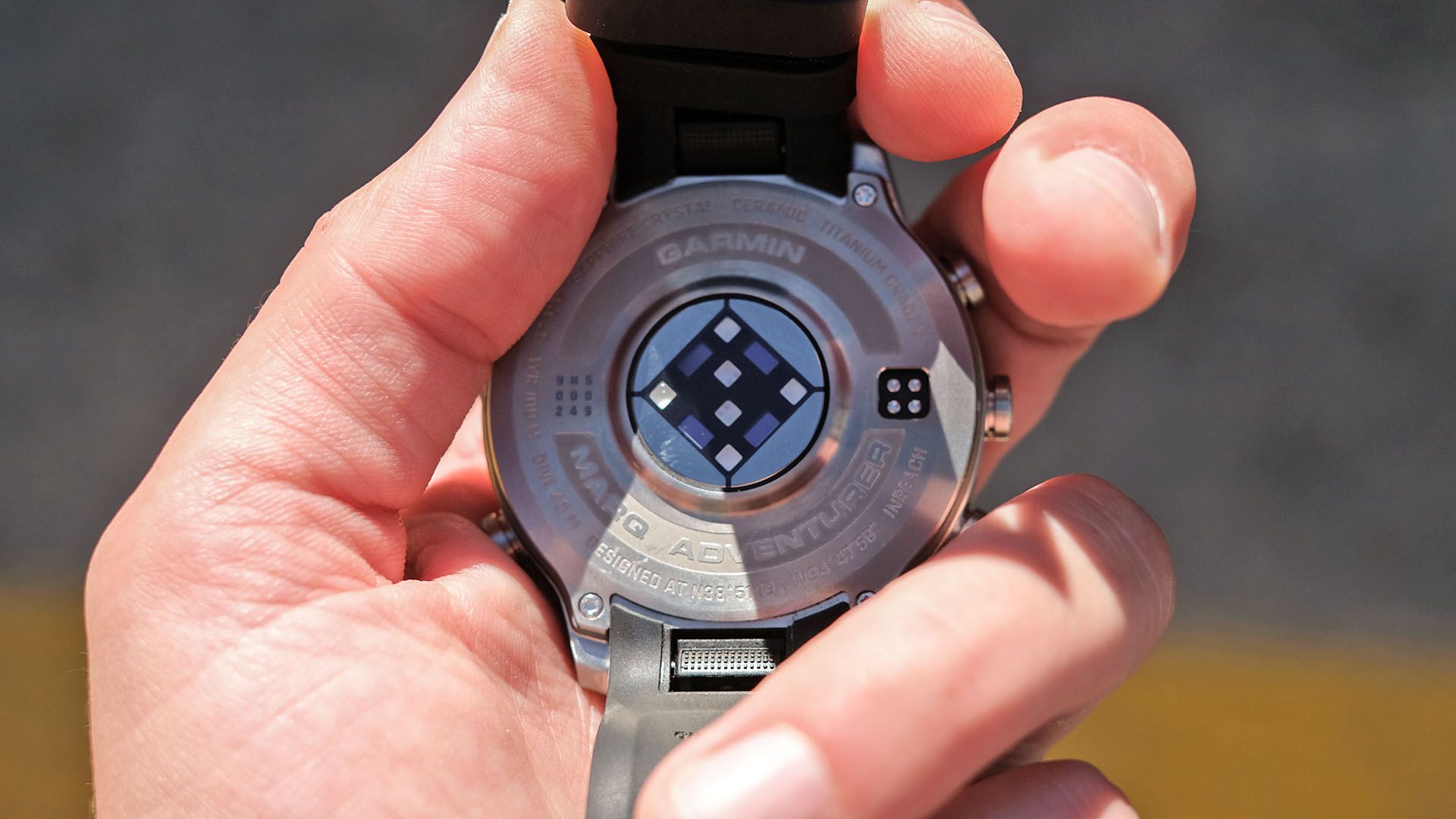
GARMIN OVERCOMES TITANIUM SIGNAL CHALLENGE WITH NANO-MOLDED CONSTRUCTION
LONDON — Garmin has developed a solution to the longstanding engineering dilemma of creating full titanium cases for premium smartwatches while maintaining radio signal transmission, the company said.
COO Brad Trenkle said the all-metal construction that premium watch buyers desire creates a fundamental problem: "There are incredible benefits you can get from having a titanium case, but the all-metal case means radio signals can't get out." In a Garmin watch, this affects Bluetooth, LTE, satellite, ANT+, NFC and Wi-Fi connectivity.
The solution was nano-molded titanium (NMT) technology. Rather than using conventional gaskets between polymer and metal components, Garmin etched titanium at the nano scale to create a surface texture that allows polymer to bond directly to the metal. This creates a super-tight, rigid bond that houses antennas while eliminating the bulk of multiple gaskets.
"To get radio signals out, you have got to have a polymer in there. You add the polymer, you have to add multiple gaskets," Trenkle said. "You add multiple gaskets you get thickness, and then suddenly you're wearing a tuna can on your wrist. And nobody wants to wear a tuna can on their wrist."
The NMT process, originally explored by HTC for the 2011 Sensation 4G phone, allows Garmin to use full titanium construction in the Fenix 9 Pro and Marq Generation 3 without the comfort drawbacks of earlier designs. The base Fenix 9 model still uses polymer sidewalls, but the Pro and Marq variants achieve full metal jackets through the bonding technique.
The innovation enables premium all-titanium watches without the 'tuna can' bulk, combining the weight savings and durability of titanium with the functionality required of connected smartwatches.