
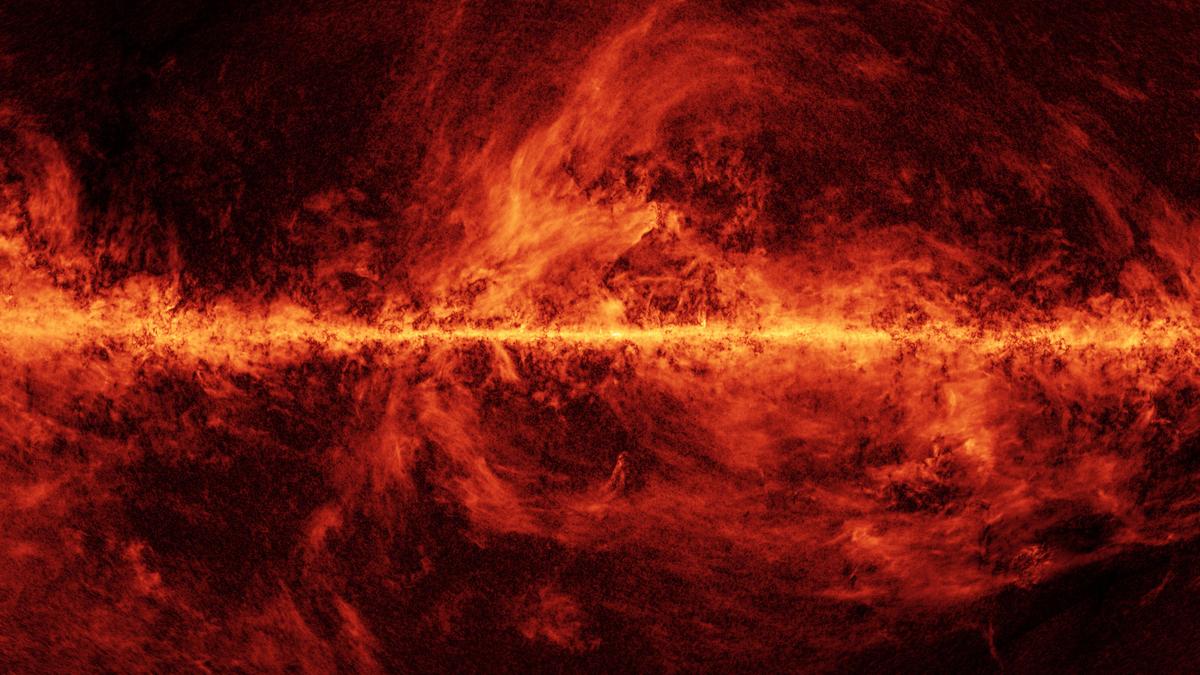
Astronomers have reconstructed the Milky Way's formation history spanning nearly 12 billion years by analyzing the chemical composition and motion of stars torn from dwarf galaxies, revealing a pattern of galactic mergers that shaped our galaxy's structure and stellar population.
The Small and Large Magellanic Clouds, two of the closest galaxies to the Milky Way, have been referenced in Australian Aboriginal tales as the Jukara, an old couple, and by Chile's Mapuche people as Rvganko or water ponds. Modern astronomical evidence shows these galaxies are currently being swallowed by the Milky Way through violent collisions.
As smaller galaxies fall into the larger Milky Way, they are ripped apart by tidal forces. This leaves behind streams and clusters of stars that do not move in lockstep with the rest of the galaxy. These stellar streams serve as fossil records, allowing astronomers to trace the galaxy's evolution over cosmic time.
Stars' chemical compositions provide a key method for grouping stars that were born together. Combined with precise motion measurements, this approach — often described as galactic archaeology — allows researchers to identify minute differences between stellar groups and piece back their rough ages. The technique has revealed the Milky Way's history dating back almost 12 billion years.
The process operates as a snowball effect, where each merger contributes to the growth and evolution of the larger galaxy. Data from new astronomical missions with larger sample sizes have afforded the precise measures needed to tease apart the minute differences between groups of stars, revealing details of the Milky Way's assembly that were previously inaccessible.