


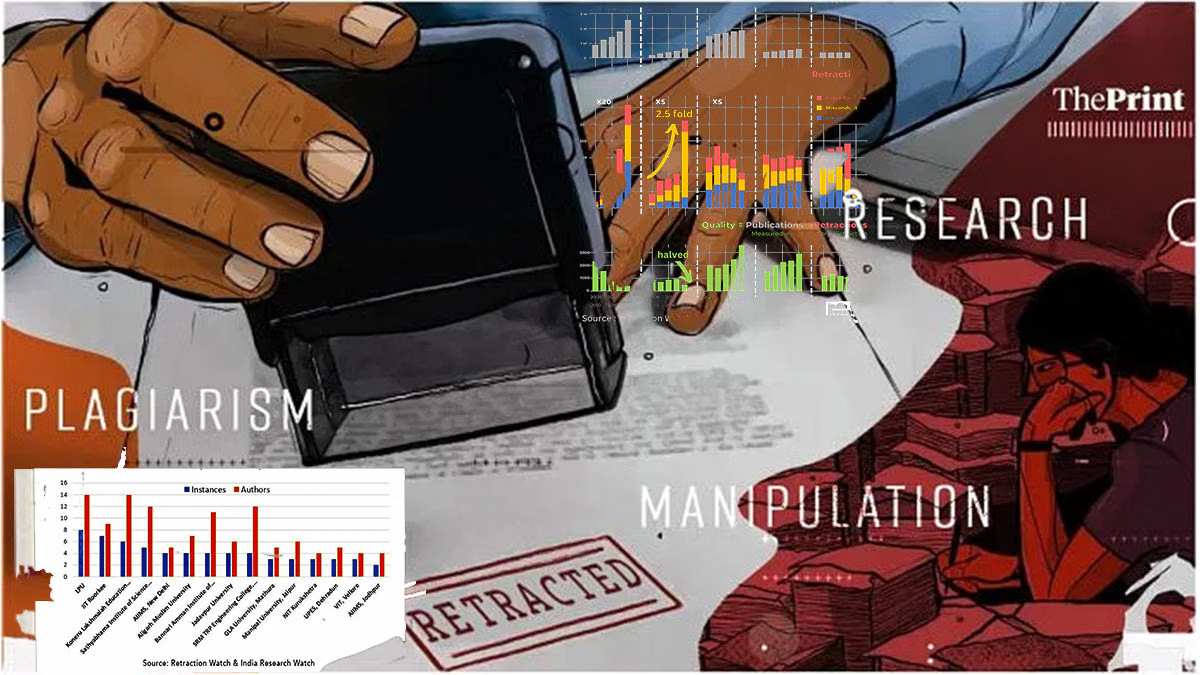
The Institute of Electrical and Electronics Engineers retracted 1,417 conference papers on October 23, 2026, following an external investigation that linked the works to paper mills selling authorship positions in academic papers.
The retractions, announced on October 28, represent the largest single bulk retraction issued by any scholarly publisher, research-integrity specialists said. The investigation, published this month in the journal Accountability in Research, had identified 2,062 IEEE conference papers between 2021 and 2026 that matched advertisements for authorship on social media platforms including Telegram, WhatsApp, and Facebook.
Of the 2,062 papers flagged in the study, 1,622 had already been retracted prior to the IEEE action. The 1,417 papers pulled on October 23 represent less than 0.06% of IEEE's conference publications over a six-year period, the organization said. IEEE has retracted nearly 3,000 papers in 2026 overall.
The study, originally posted as a preprint in April and published in Accountability in Research, found that prices for authorship ranged from US$43 to $400 for a first-author slot and $11 to $200 for a last-author slot. Researchers identified 4,407 advertisements selling authorships on conference papers across more than 200 social-media channels.
India figures prominently in the findings: of 109 IEEE-sponsored conferences with at least five papers matching the advertisements, 95 were held in India. Several were sponsored by regional IEEE sections, including those in Uttar Pradesh, Madras, Madhya Pradesh and Bangalore.
The IEEE statement noted that, after irregularities were identified via an external study, the publisher conducted a comprehensive review and found that the papers violated IEEE's publication principles. Retraction notices for all 1,417 papers pulled last week, and for another 7 that have no clear retraction date, state that the articles "may have been offered for sale."
Conference submissions are not subject to the same integrity checks that submissions to IEEE journals undergo, researchers say. They are "fast to publish" and often indexed in scholarly databases, adding to vulnerability. IEEE Vice President W. Clem Karl said protecting the integrity of the scholarly record is a responsibility shared across the entire research community. Steven Heffner, Chief Publications Officer and Managing Director, Publications, IEEE, said researchers trust IEEE publications because of the rigour and integrity behind them.
The organization said it continues to develop quality controls, expert oversight and detection technologies to address publication misconduct and protect the scholarly record. The retractions affect conference proceedings published between 2021 and 2026 across 366 IEEE conference proceedings. Overall, the case highlights ongoing concerns about academic publishing practices where pressure to accumulate publications can create incentives for researchers to purchase authorship positions.