


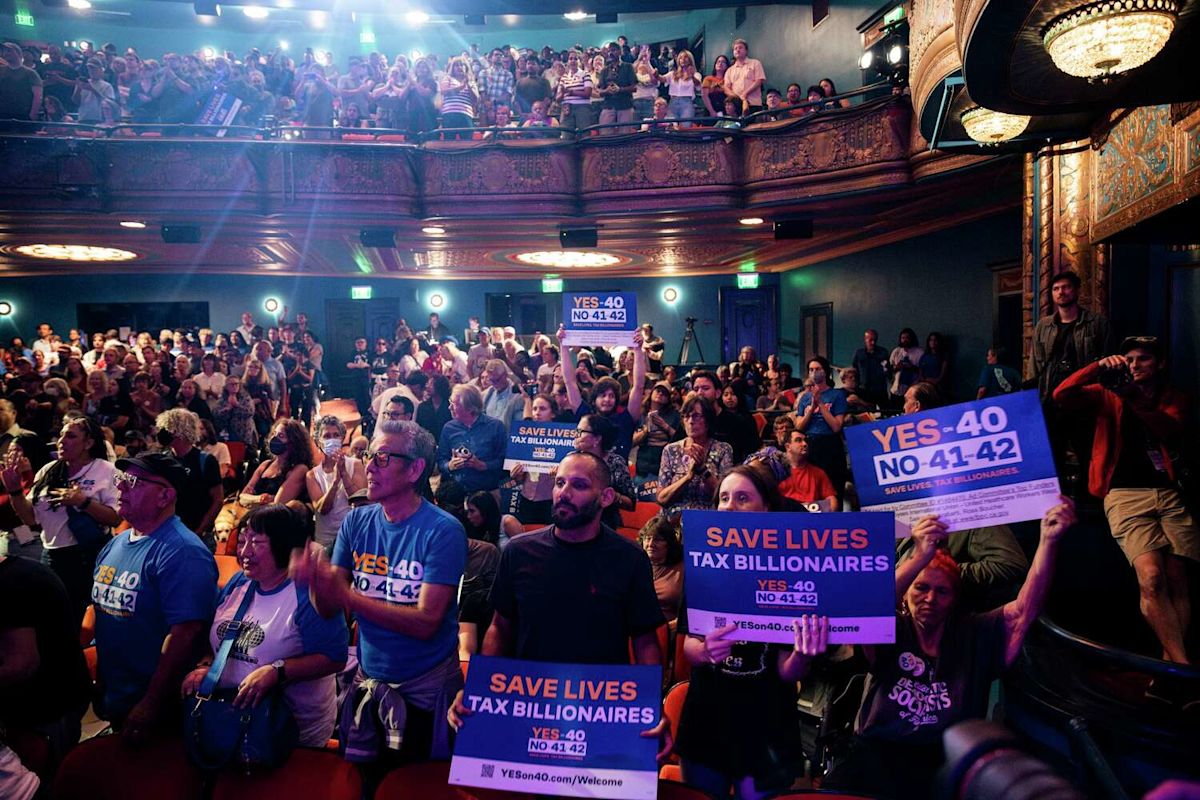

SACRAMENTO – California voters are deciding the fate of Proposition 40, a landmark ballot measure that would impose a one-time 5% wealth tax on individuals and trusts with assets exceeding $1 billion.
The vote, which took place November 2026, came after a campaign that drew more than $333 million in opposition spending, much of it from billionaires who have already relocated or pledged to fight the measure.
Proposition 40 would tax the net worth of billionaires and certain trusts above the $1 billion threshold, with revenue earmarked for state healthcare programs, public education and food assistance. The tax would be payable over five years and apply to assets including businesses, securities, art, collectibles and intellectual property, though real property, pensions and certain retirement accounts would be exempt.
The measure’s retroactive application to California residents as of January 1, 2026, prompted several high-profile departures. Google co-founders Larry Page and Sergey Brin, Oracle founder Larry Ellison and PayPal co-founder Peter Thiel had all moved out of state before the cutoff date. Max Levchin, co-founder of Affirm Holdings, told Bloomberg he would probably leave if the tax passed.
The fiscal projections have been sharply divided. UC Berkeley economists Gabriel Zucman and Emmanuel Saez, writing alongside Jasper Boll of the Paris School of Economics, estimated the tax could raise about $100 billion over the five-year collection window, with comparatively minor impacts on income tax revenue. They argued billionaires currently pay about $3 billion annually in California income taxes, representing 2.5% of the state's income tax base.
However, a working paper by Hoover Institution senior fellow Joshua Rauh and research fellow Benjamin Jaros reached the opposite conclusion. Their analysis estimated the net present value of the tax at negative $38.9 billion, finding that over time, permanently lost income tax revenue from billionaire departures would more than offset the one-time wealth tax collections. The economists found the net present value would be negative in about 85% of simulated outcomes.
Rauh and Jaros argued that announced billionaire departures had already reduced the tax base by about 30%, and that continued fear of future wealth taxes would drive further exits, permanently shrinking California's revenue base.
The measure's fate was further complicated by two competing propositions on the same ballot. Proposition 40 would take effect only if Propositions 41 and 42, which address state spending limits and prohibit retroactive taxation respectively, also fail. Building a Better California, the political committee funded by Silicon Valley billionaries, spent over $304 million opposing the tax and advancing the competing measures.
Prominent Democrats including Governor Gavin Newsom, Attorney General Rob Becerra and former Congresswoman Katie Porter opposed the tax, arguing it would drive wealth and residents out of California. The measure still had support from progressive leaders including Senator Bernie Sanders, Representative Ro Khanna and billionaire climate activist Tom Steyer, who argued the revenue was needed to offset federal cuts to healthcare funding.
As polls closed, the measure faced an uphill battle. Earlier surveys had shown narrowing support, with a October Public Policy Institute of California poll finding 46% of likely voters in favor and 52% opposed. A Berkeley IGS poll showed similar dynamics, with 42% planning to vote yes and 50% no.