

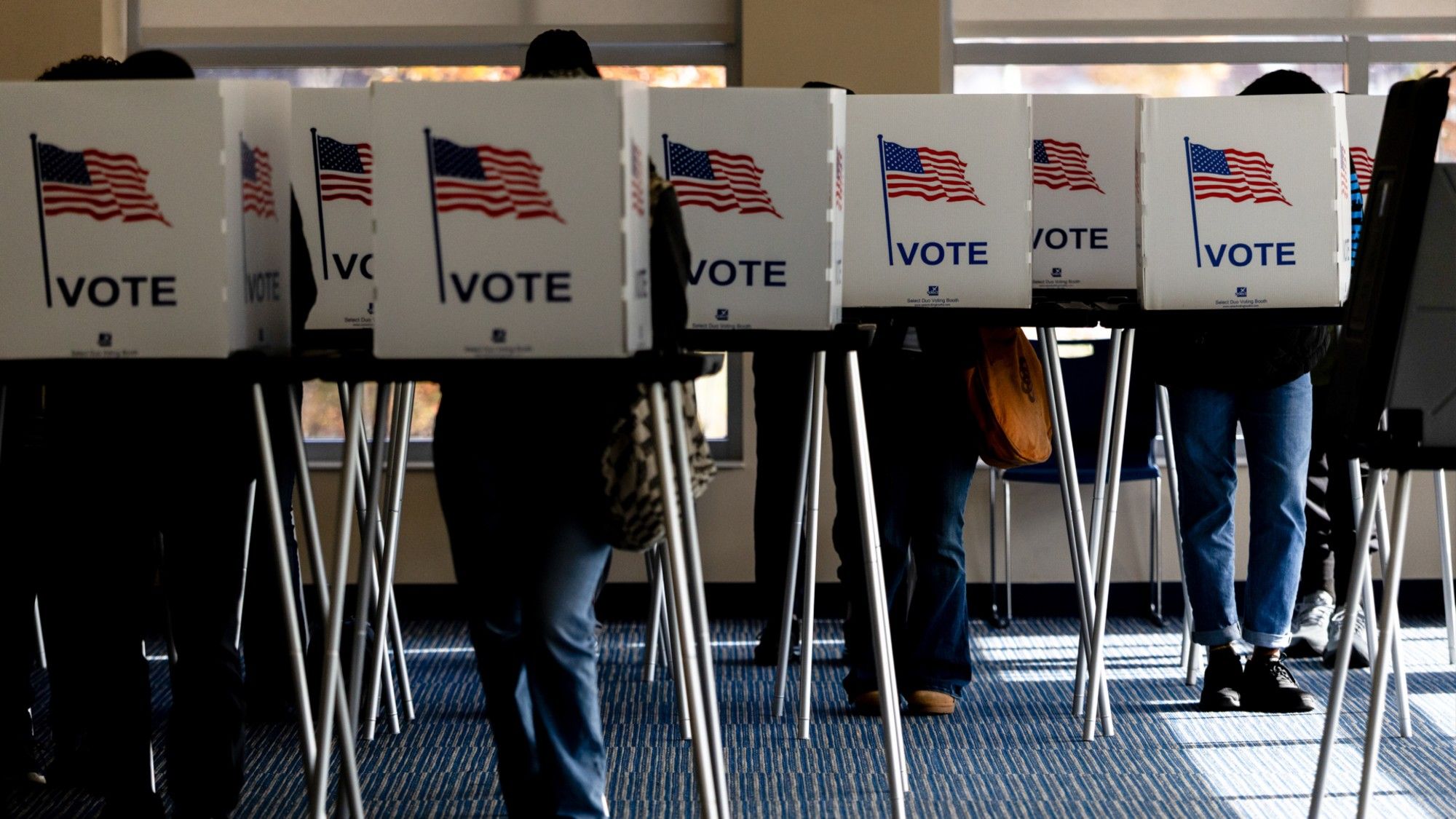
WASHINGTON — Tuesday's midterm elections serve as a critical verdict on President Donald Trump's first two years in office, with control of Congress hanging in the balance.
The elections represent a referendum on Trump's aggressive executive actions, including foreign policy shifts toward America First nationalism, realignment of global alliances, and confrontational rhetoric toward political opponents. Voters expressed widespread concerns about economic affordability, including inflation, housing costs, and healthcare accessibility, alongside border security and anxiety about the impact of AI on job security.
Democrats needed to win back the House or Senate to initiate investigations into administration conduct, Cabinet appointments, and alleged government corruption. Republican retention of both chambers would sustain Trump's agenda with minimal constitutional restraint.
Early voting data indicated Democrats held a turnout advantage, having cast approximately 43% of early votes compared to Republicans' 31%. Polling from The New York Times and Siena suggested Democrats could take the Senate with room to spare, though The Week's Harry Enten placed odds at 72%, noting Democrats were nine points up on Republicans — a margin that easily overcomes GOP redistricting.
The outcome will shape not only Trump's remaining tenure but also the 2028 presidential landscape. A strong GOP performance would sustain Trump's influence, while Democratic victories could raise questions about the durability of Trumpism beyond the president's political career. Potential candidates from both parties, including Vice President JD Vance and Democratic governors, are watching closely.
Trump has challenged election conduct in Alaska and California, drawing comparisons to his efforts to overturn the 2020 election. Despite these challenges, most observers expected voters to participate broadly, with early voting trends offering clues about subgroup turnout.
The midterms also serve as a test of democratic institutions, with Trump signaling he would accept results only if he deems them fair. The election aftermath is certain to reignite debate about executive power, congressional oversight, and the direction of American politics in the years ahead.