

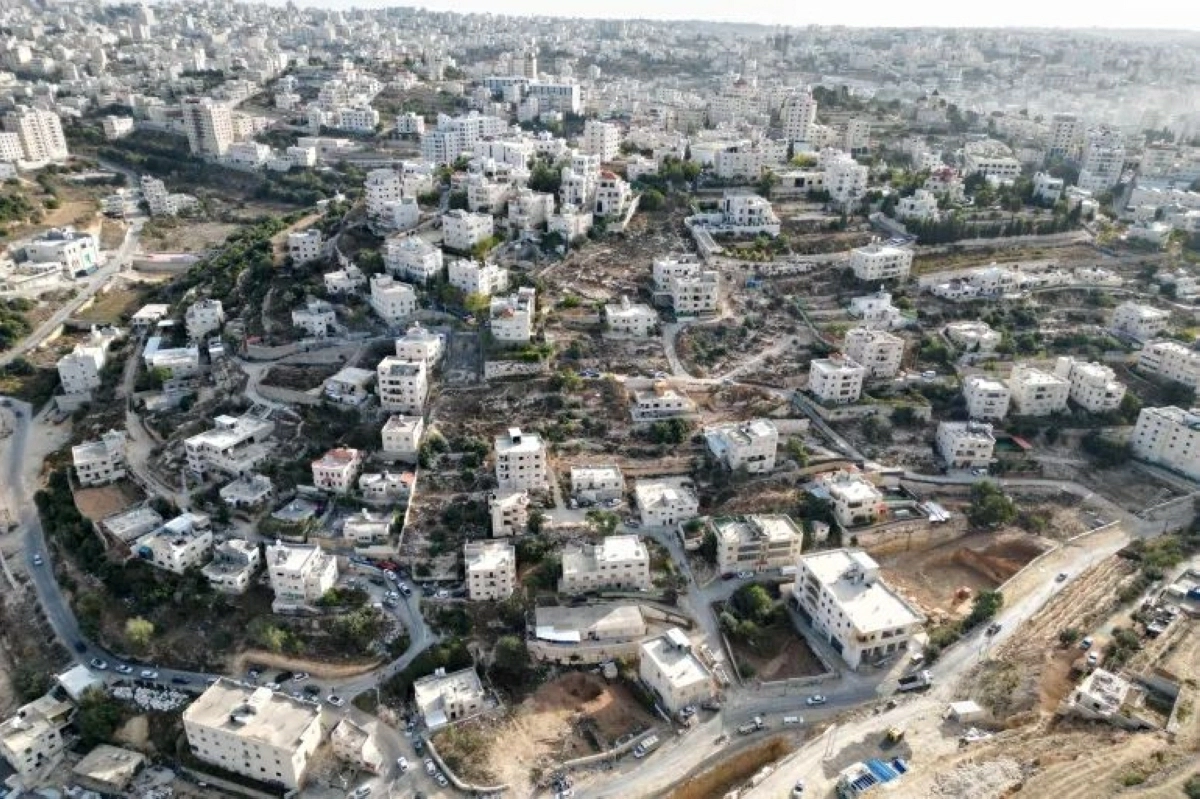

HEBRON — Israeli forces withdrew from Hebron in the southern occupied West Bank on Monday after a 10-day siege that began on October 23 following a shooting attack that killed two Israeli soldiers and wounded three others, the governor said.
Palestinian security forces have taken full control of the area following the Israeli withdrawal, Governor Khaled Dudin said. Relevant authorities and Palestinian security forces are monitoring developments on the ground and working to provide the necessary conditions for residents to return safely.
The Israeli army launched the operation on Oct. 23 following a shooting attack by two Palestinians near the city. Israeli forces later killed the two attackers. During the 10-day operation, Israeli forces imposed closures on the city and surrounding villages, seized Palestinian homes in the Al-Jalda and Ein Deir Baha areas and converted them into military posts. The operation also involved forced displacement, demolitions of homes, other structures and commercial properties, and damage to infrastructure.
Hebron Mayor Youssef al-Jaabari told Al Jazeera the municipality was officially informed of the withdrawal at 6 am (04:00 GMT). "For the first time in 10 days, schoolchildren are going to their schools; university students are now on their way to their universities," he said, adding that five universities had been closed during the siege. "There was a complete closure, no entry or exit from the city, and all aspects of life, whether economic, educational, health, or even those related to municipal work, had completely stopped."
Al Jazeera reported that vehicles carrying displaced families began arriving minutes after the withdrawal, with residents congratulating one another on returning safely. In one residential building used as a military post, Al Jazeera found damaged furniture, ransacked rooms and food left behind by soldiers. Residents said they had been forced out of their homes at 2 am, with Israeli troops giving them five minutes to gather any medicine, phones or personal documents.
The Palestinian Civil Defence urged residents not to touch suspicious objects or enter damaged buildings before they had been inspected, the official Palestinian news agency Wafa reported. Israel’s military initially said the Hebron operation would target the homes of the two suspects in the killing of Israeli soldiers, but later widened the scope of the operation to the entire governorate, home to about 800,000 people, closing its checkpoints and seizing homes in al-Jalda and Ein Deir Baha as military posts. At least 537 families were forced out at night and had to take shelter with relatives elsewhere in the city.
More than 3,300 Palestinians were displaced or otherwise affected, according to the Hebron governorate. The Hebron municipality said on Sunday that Israeli forces had demolished 15 homes and structures and that 327 shops had closed, with direct economic losses exceeding 12 million shekels ($3.8m) a day, Wafa reported. "Everything damaged we will rebuild," Mayor al-Jaabari said, as municipal crews headed to al-Jalda, Ein Deir Baha and Shubat al-Malh to assess damage.
About 80,000 students in the city were unable to attend school, according to Wafa. Atrash said some 262,000 students across the governorate missed nine days of classes. Hebron, the occupied West Bank’s main economic centre, contains 220 of the Palestinian territory’s 940 Israeli military checkpoints and gates, disrupting 4,000 factories.
The Hebron municipality and displaced residents also challenged the operation in Israel's Supreme Court, seeking an end to forced evacuations, demolitions and restrictions on movement. The petition, filed by the legal rights organization Adalah, argued that the measures amounted to collective punishment and violated international humanitarian law. The state said following security developments there was no longer a security or humanitarian need that justifies preventing the return of residents to their homes, and asked the court to dismiss the petition as moot.
The operation drew criticism from the UN, with human rights chief Volker Turk warning on Oct. 26 that the mass displacement, demolitions and sweeping movement restrictions raised serious concerns about Israel's use of force. "Collective punishment is a grave violation of international law," Turk said, calling for displaced residents to be allowed to return and for reparations for unlawful evictions and demolitions.
Israeli forces have withdrawn from Hebron after the governor's announcement, allowing displaced families to return home as Palestinian security forces assume control of the area.