
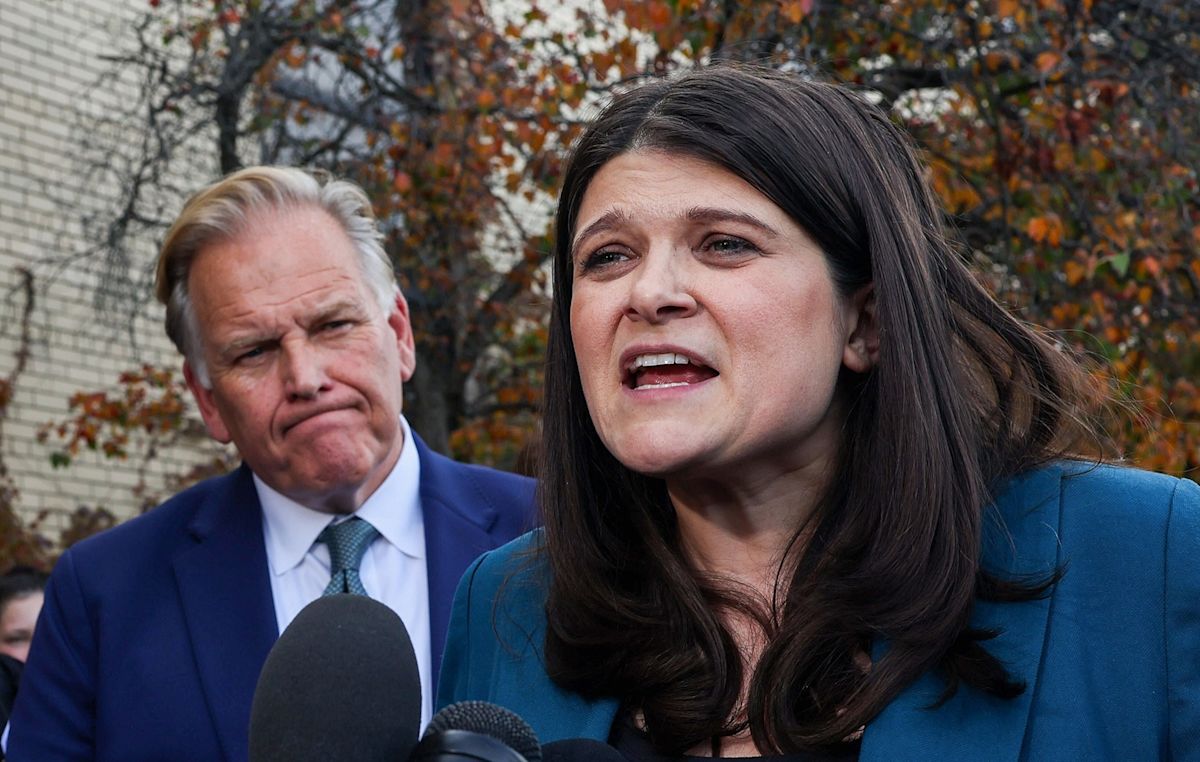
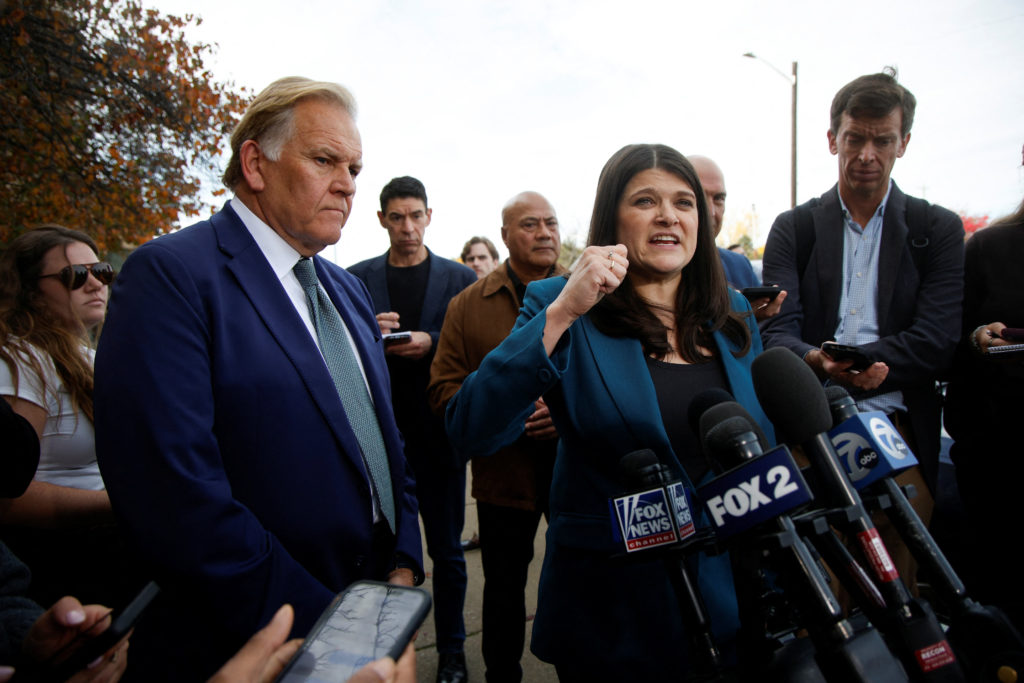

WASHINGTON — Democratic Rep. Haley Stevens unexpectedly endorsed Republican Mike Rogers for Michigan U.S. Senate on Sunday, reversing her position after losing the August primary to Abdul El-Sayed and triggering an immediate backlash from party leaders who called the move a betrayal.
The endorsement, coming just days before the election, generated a record $2.4 million in donations for El-Sayed's campaign within hours, the candidate's team said, attributing the surge to the high-profile switch. More than 65,000 donors contributed, nearly half of them first-time contributors.
Stevens told ABC News she endorsed Rogers because she believes the Democratic Party has moved in a direction she finds dangerous, saying "someone in the Democratic Party has got to say that this crap has got to stop" and that the party "is just not going to have this socialist, far extreme, hateful division."
Republican leaders swiftly praised the endorsement. House Speaker Mike Johnson called it "heroic and important," while former President Donald Trump said it showed "great loyalty to Michigan."
But Democratic leaders were swift to condemn. Rep. Debbie Dingell, who spoke with Stevens repeatedly last week, said she was stunned — she had spoken with Stevens on Saturday night and was assured she would not support Rogers, only to wake up Sunday and see the endorsement. Dingell said she was the one who told Stevens not to attend a unity event with El-Sayed, Rep. James Clyburn and Sen. Angela Alsobrooks at a Black church, though an ABC News source said the El-Sayed team had disinvited her.
"I did feel on Saturday that this is leaning towards Abdul. It's going to be a tight race," Dingell said. "But as I was out yesterday, NAACP, the UAW disability dinner, canvasses, this put a lot of energy into people."
House Minority Leader Hakeem Jeffries called the endorsement "a terrible decision, blindsided everyone and isolated herself from the House Democratic caucus." Virgie Rollins, chair of the Democratic National Committee Black Caucus, said she was "dismayed that Congresswoman Haley Stevens has revealed herself to be a sellout who used Black Michiganders for a political stunt."
Senate Majority Leader Chuck Schumer called the move "a despicable betrayal" and suggested Stevens should face consequences within the caucus.
The endorsement also highlighted tensions around Israeli-Palestinian policy in the race. Jason Turkish, Stevens' fiancé and a Democrat, announced he would vote for Rogers primarily because of El-Sayed's criticisms of Israel. Turkish reportedly scolded Stevens about her decision in front of a former Michigan governor, telling her "Everyone is disappointed in you."
El-Sayed dismissed the endorsement's impact on the race. "At the end of the day, I actually don't think about Haley Stevens," he told reporters. "None of this matters."
The most concrete impact appears to be the effective end of Stevens' political future within the Michigan Democratic Party. Curtis Hertel, chair of Michigan's Democratic Party, said Stevens' endorsement "shows that she has abandoned everything she claims to care about" and that she "is not a current member of the Michigan Democratic Party, nor will she be in the future."
Stevens told ABC News she "fully represents" and is "fully in" the Democratic Party.
The race for Michigan's open Senate seat was already competitive. An October New York Times/Siena poll showed El-Sayed leading 53-42 percent, while a CNN poll from last week had El-Sayed at 49 percent and Rogers at 42 percent, with about 75 percent of Black voters backing El-Sayed and 10 percent backing Rogers.