
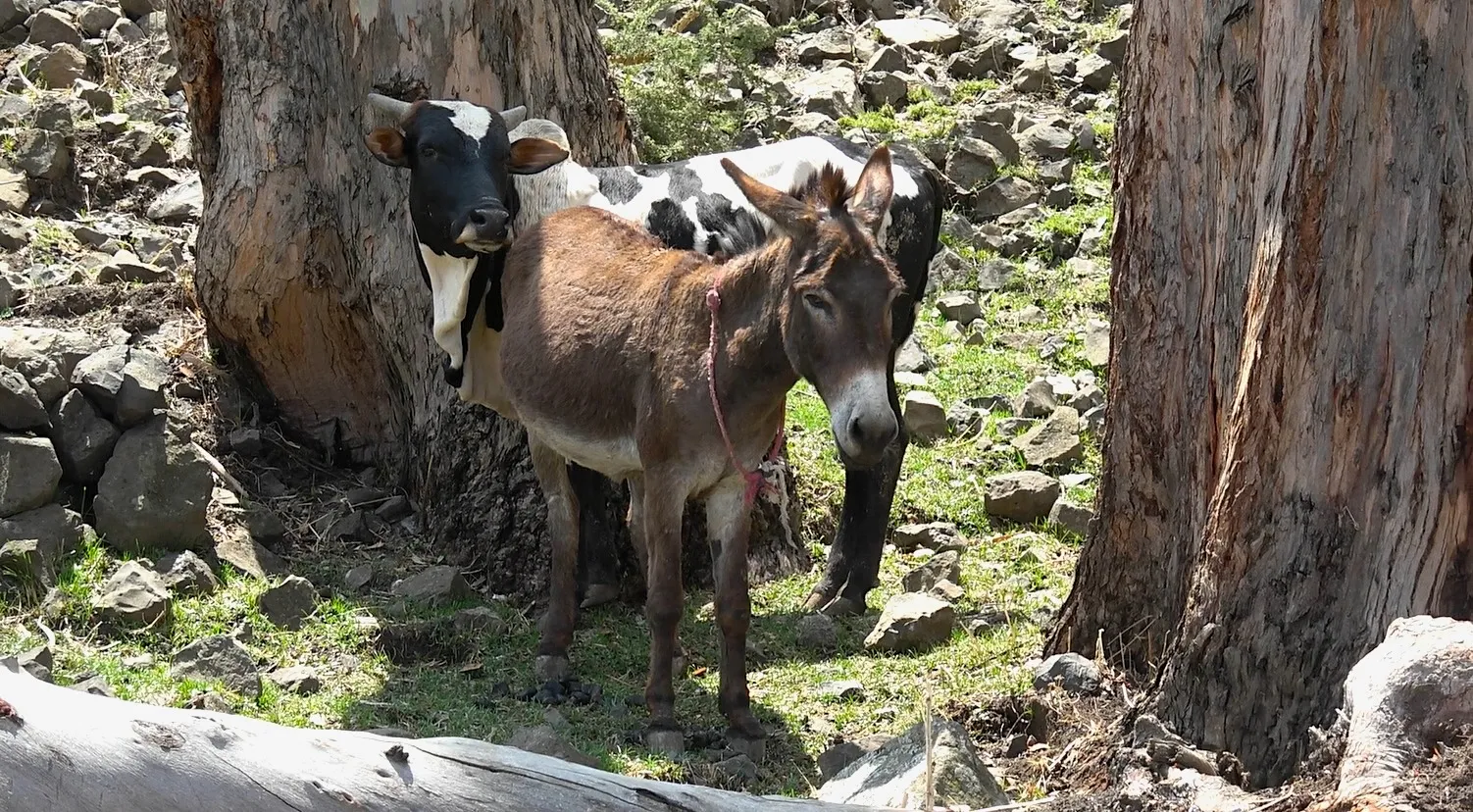

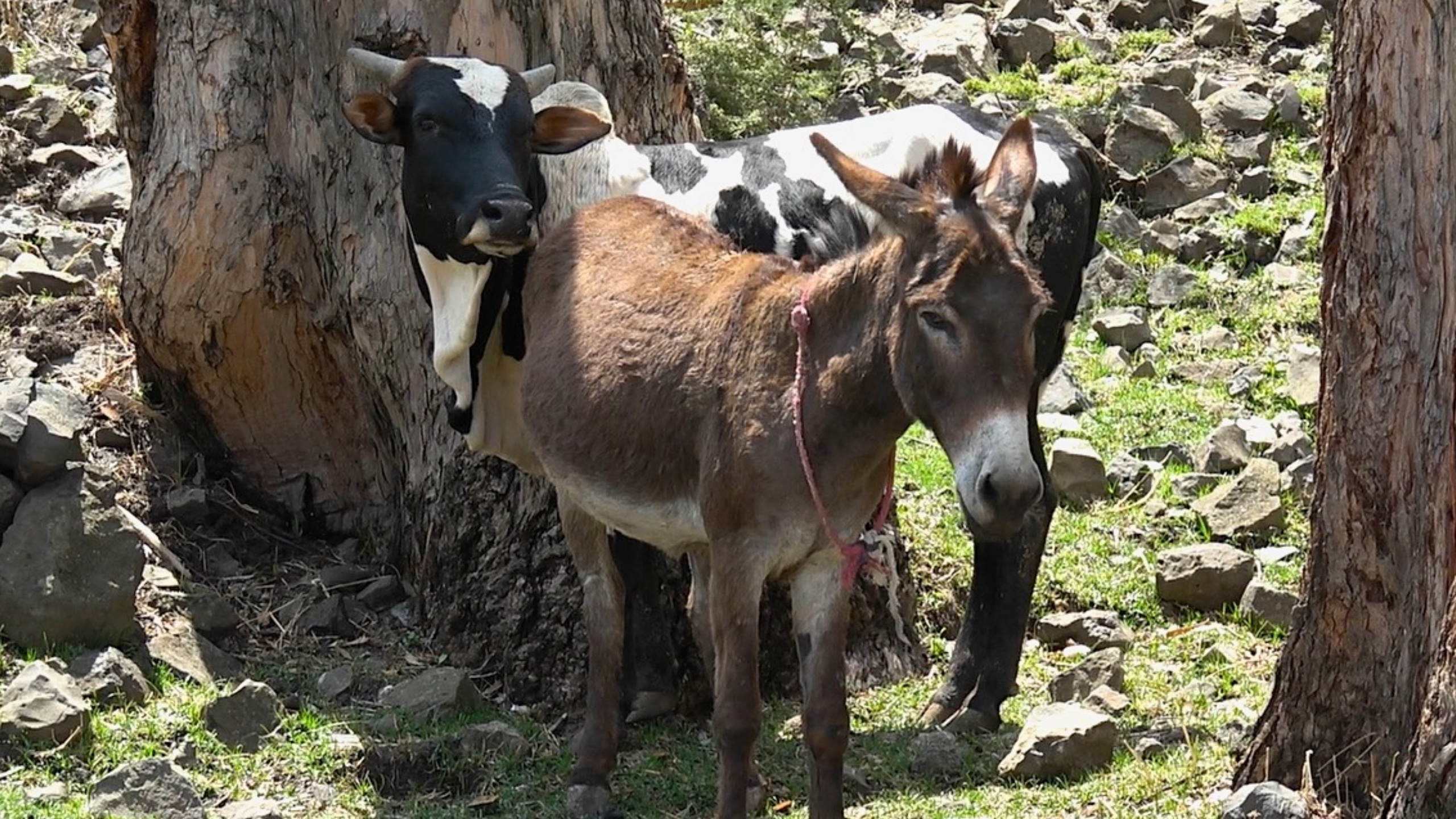

ELISABETTA PALAGI was in Ethiopia to study gelada monkeys, primates with distinctive chest markings that gleam on the grassy plateaus they inhabit. But her team of research students, scanning the landscape alongside other grazing animals, noticed something peculiar: a bull approaching a male donkey and mounting him.
The donkey did not kick him or try to escape. In fact, he appeared to accept the interaction.
Palagi’s team contacted the biologist and asked if this cross-species intercourse was worth studying. "I said yes," Palagi wrote in an email.
What followed was a close observation of what researchers describe as the first documented sustained same-sex sexual relationship between a bull and a donkey. Over four days on the plateau, Achille the bull mounted Patroclo the donkey 51 times, 34 of which resulted in penetration. The donkey showed no avoidance behavior and repeatedly presented his hindquarters to the bull.
But researchers were even more struck by the nature of the bond. The two never spent nights together — they belong to different owners — but on the plateau they licked and rubbed each other and spent most of their time in close proximity. Patroclo showed avoidance of other bulls but was receptive to Achille. When Achille approached other donkeys, Patroclo would move in to distract him, suggesting active preference.
The researchers had traveled to the Ethiopian highlands to study gelada monkeys when they noticed the interactions by accident. While same-sex sexual behavior among animals is well documented, observations of sex between animals of different species are much rarer. The case of Achille and Patroclo, the researchers say, suggests animal social and sexual relationships are more complex and flexible than previously expected.
"The mounting initially attracted our attention, but their repeated preference for each other's company became the most compelling part of the story," Palagi said.
Achille and Patroclo were named after the Greek hero Achilles and his companion Patroclus. In the Iliad, their deep attachment is central to the story — after Patroclus is killed in battle, Achilles falls into deep despair that transmutes into rage.
For now, the pair have been separated. The paddock where they grazed together has been depleted of grass, and their herds have been moved to separate areas. Palagi’s students are back in Ethiopia and plan to ask the herders if the two can be reunited. Palagi wonders how this meeting might go — if the two would resume licking and mounting, or if their interest will have waned after months apart.
But for now, their unusual affection is recorded in the annals of scientific literature, a reminder that nature's palette extends well beyond the boundaries we draw around it.
Current Biology, 2024
